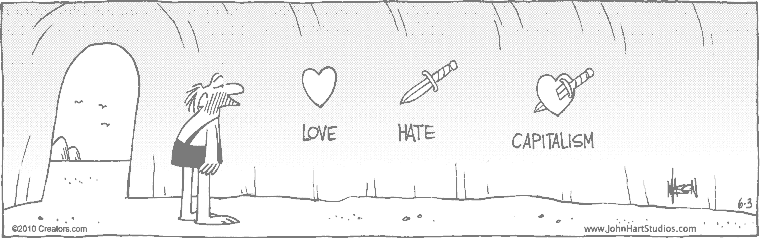
Actually, that terrible metaphor sidetracked my thinking onto this path: it's possible to clean dishes without the soap suds, but it's easier to do it with them, just as it's possible to go to war with or without lies, but easier to do so with them. But once the dishes are clean, once they're demonstrably, unarguably clean, there is very little point in arguing over whether or not soap suds were used in cleaning them.
Of course, the metaphor, being terrible, begins to break down here, because the discussion of whether or not "the Bush Administration" (more correctly the imperial capitalist powers) used lies as part of the buildup to the definitive 2003 escalation of war in Iraq (and if you actually attempt to argue that they didn't, then like Karl Rove you clearly have a vested interest in doing so) can at least potentially have the effect of illuminating the reality of just exactly what it is that's going on with that whole war thing.
But the unspoken, and sometimes even explicitly spoken, assumption of not only Rove's article but also the liberal/Democrat rhetoric that preceded and will follow it, is that the presence or absence of these lies actually plays a part in determining the morality of the war itself. And this is complete nonsense.
Scenario One: George W. Bush says Iraq has nuclear weapons, Colin Powell says that Iraq went to The Mall of the Africas shopping for uranium, and then American troops go into Iraq and kill several millions of people for money.
Scenario Two: George W. Bush says he and his friends will make lots of money if American troops go into Iraq and kill several millions of people, Colin Powell says that he and his friends will make lots of money if American troops go into Iraq and kill several millions of people, and then American troops go into Iraq and kill several millions of people for money.
In which scenario do more people die?
Again: I am not saying that a discussion of the nature of the lies is a bad thing. But in all that discussion, the fact that millions of people have died seems to get lost. War is an evil thing regardless of the excuses people give for it, regardless of why people say they do it, regardless of whether or not people lie about it. The lie, in and of itself, is not the Big Bad here.
On a different note, this paragraph in Rove's article interested me:
The battering would continue, and it was a monument to hypocrisy and cynicism. All these Democrats had said, like Mr. Bush did, that Saddam Hussein possessed WMD. Of the 110 House and Senate Democrats who voted in October 2002 to authorize the use of force against his regime, 67 said in congressional debate that Saddam had these weapons. This didn't keep Democrats from later alleging something they knew was false—that the president had lied America into war.Mostly because it's a very odd sensation to read the first three sentences of a paragraph, and the first nine or ten words of the last sentence, and think "This guy's right on the money," and then read the rest of the last sentence and think "What the fuck is this insanity?"




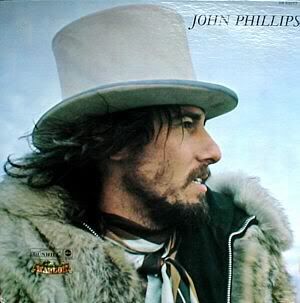 As the 60's groups broke up and members started releasing solo albums, circa 1970, some truly amazing music happened, and almost none of it was what you would expect from the people responsible. As an example, Plastic Ono Band, McCartney, and All Things Must Pass are three extraordinary objects*, none of them what anyone must have been expecting from the former Beatles at the time (with the possible exception of parts of All Things Must Pass). Not having been born yet, I can't even imagine what it would have felt like to be experiencing it as it happened (my father described it as "very, very sad" when I asked him, and it certainly must have been, but sad as the music and the circumstances that produced it are, it is incredibly vital music; there must have been an overwhelming excitement mixed in with the sadness).